Potassium Stannate O-Ring Compatibility: Which Compounds Hold Up
Potassium stannate O-Ring guide for alkaline tin plating baths: chart ratings, which elastomers to use around plating tanks, and which to avoid.
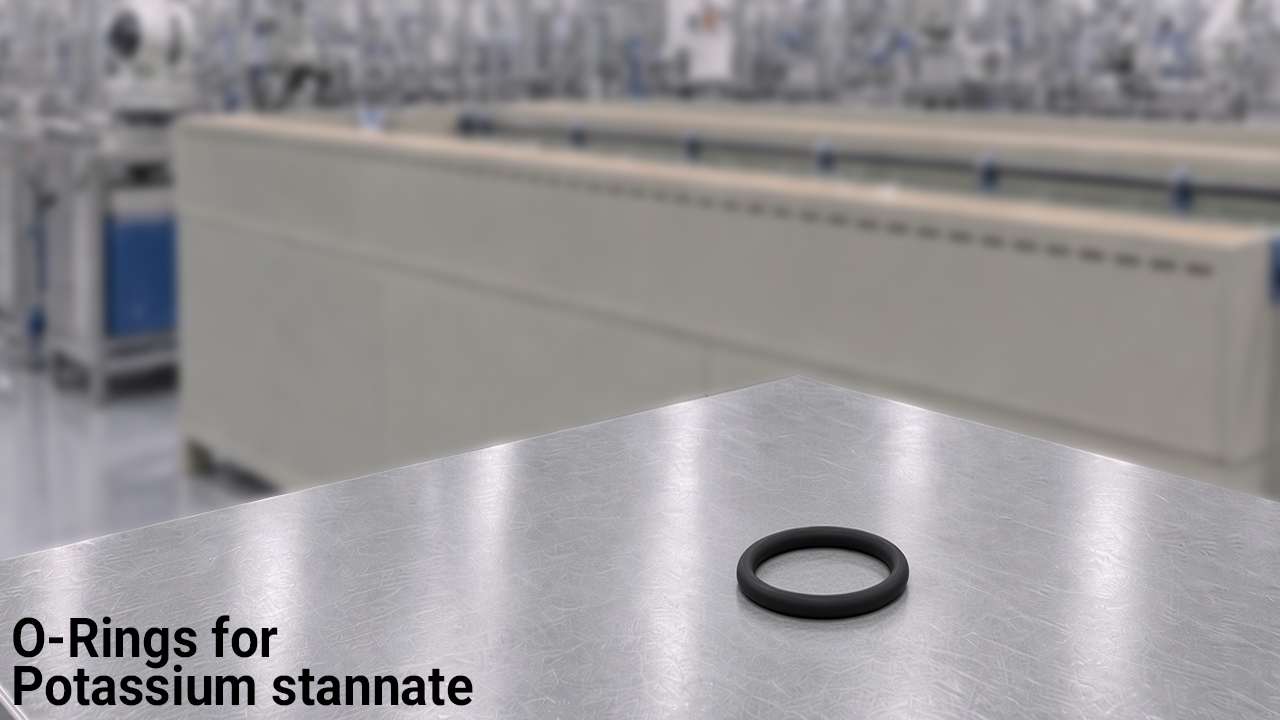
Potassium stannate is the preferred tin salt for alkaline tin electroplating. Baths built on potassium stannate and free potassium hydroxide run hotter and denser than many sodium stannate systems, which is why high-speed rack and barrel tin lines still depend on it. Seals on tanks, pumps, filters, heaters, and transfer lines see warm alkaline stannate solution, not a mild room-temperature rinse.
This guide maps the handbook Chemical Compatibility Chart row for potassium stannate to practical O-Ring choices.
Where it shows up
- Alkaline tin electroplating: primary Sn(IV) source in potassium-base stannate baths for rack and barrel plating
- High-speed tin lines: higher solubility than sodium stannate supports higher current density and faster deposition
- Immersion tinning: thin tin films on aluminum parts (for example pistons) and related specialty tinning
- Electronics and connector plating: solderable tin deposits where alkaline throwing power matters
- Oil-country and industrial tinning: coatings where alkaline processes are preferred over acid tin for hydrogen-embrittlement concerns on some steels
Operating baths commonly sit around 70–90°C (roughly 160–190°F) with free KOH for conductivity and bath stability. Chart ratings are a first pass for a generic commercial compound near room temperature. Confirm concentration, free alkali, and continuous bath temperature for your line.
How potassium stannate stresses an O-Ring
The working environment is aqueous alkaline (stannate + free hydroxide), often hot. That favors water- and alkali-friendly elastomers and punishes many oil-service stocks. Heat raises the stakes: a compound that is only “fair” at room temperature can harden, set, or crack faster in a hot plating loop. See Chemical Compatibility, the O-Ring Temperature Guide, and Failure Analysis.
Handbook chart ratings for potassium stannate
Same rating badges and layout as the interactive chart. Search potassium stannate on the Chemical Compatibility Chart to pin the live row.
| Fluid | Best | N Nitrile | H HNBR | E EPDM | C Neoprene | S Silicone | V Viton® | P Urethane | F FVMQ | A Aflas® | B Butyl | K FFKM | T PTFE |
|---|---|---|---|---|---|---|---|---|---|---|---|---|---|
| Potassium Stannate | E | 3 | 3 | 1 | 1 | 2 | 3 | 4 | 1 | X | 1 | 1 | 1 |
Best family on the chart row: EPDM (E). Neoprene, fluorosilicone, butyl, FFKM, and PTFE also rate excellent (1). Silicone rates good (2). Nitrile, HNBR, and FKM rate poor (3). Polyurethane is not recommended (4). Aflas lacks data (X) on this row.
Recommended O-Ring materials
First choice: EPDM
EPDM is rated excellent (1) and is the chart’s preferred letter for potassium stannate. It matches warm alkaline / aqueous plating service far better than petroleum-oil workhorses. Use 70 Shore A for most static covers and transfer seals; step hardness or add a back-up ring if pressure and gap climb.
Also usually serviceable
Materials to use with caution or avoid
Physical properties to match
Chemistry first, then the machine:
- Temperature: plating baths often run hot. Stay inside the compound’s continuous window and check compression set near bath temperature (Temperature Guide).
- Hardness: 70 Shore A for most static lids and flanges; 90 Shore A or a back-up ring when pressure and clearance gap raise extrusion risk (Shore A Hardness).
- Static vs dynamic: tank covers and filter lids are mostly static; pump seals and agitator glands need abrasion and set resistance, not only a chart “1”.
- Size: lock ID × CS or the AS568 dash on the Master O-Ring Size Chart before arguing compound.
Practical selection checklist
- Confirm potassium stannate (not only “tin bath”) and free KOH level.
- Note bath temperature and whether the seal sees continuous immersion or splash.
- Start with EPDM unless another excellent family is already plant-standard.
- Avoid nitrile / HNBR / FKM / polyurethane for this row unless a grade datasheet and immersion test say otherwise.
- Pin potassium stannate on the Chemical Compatibility Chart and test critical glands. Contact us with bath concentration, temperature, and duty cycle when the line is production-critical.
Bottom line
For potassium stannate alkaline tin plating service, the handbook chart points to EPDM first, with neoprene, fluorosilicone, butyl, FFKM, and PTFE also rated excellent. Treat oil-service defaults (nitrile, HNBR, FKM) and polyurethane as the wrong starting point. Size the ring correctly, then match hardness and heat resistance to the hot alkaline bath you actually run.