Naphtha O-Ring Compatibility: Which Compounds Hold Up
Naphtha (petroleum solvent) O-Ring guide: which elastomers swell or fail, why FKM and nitrile usually win, and how to read the chemical compatibility chart for VM&P and solvent naphtha.
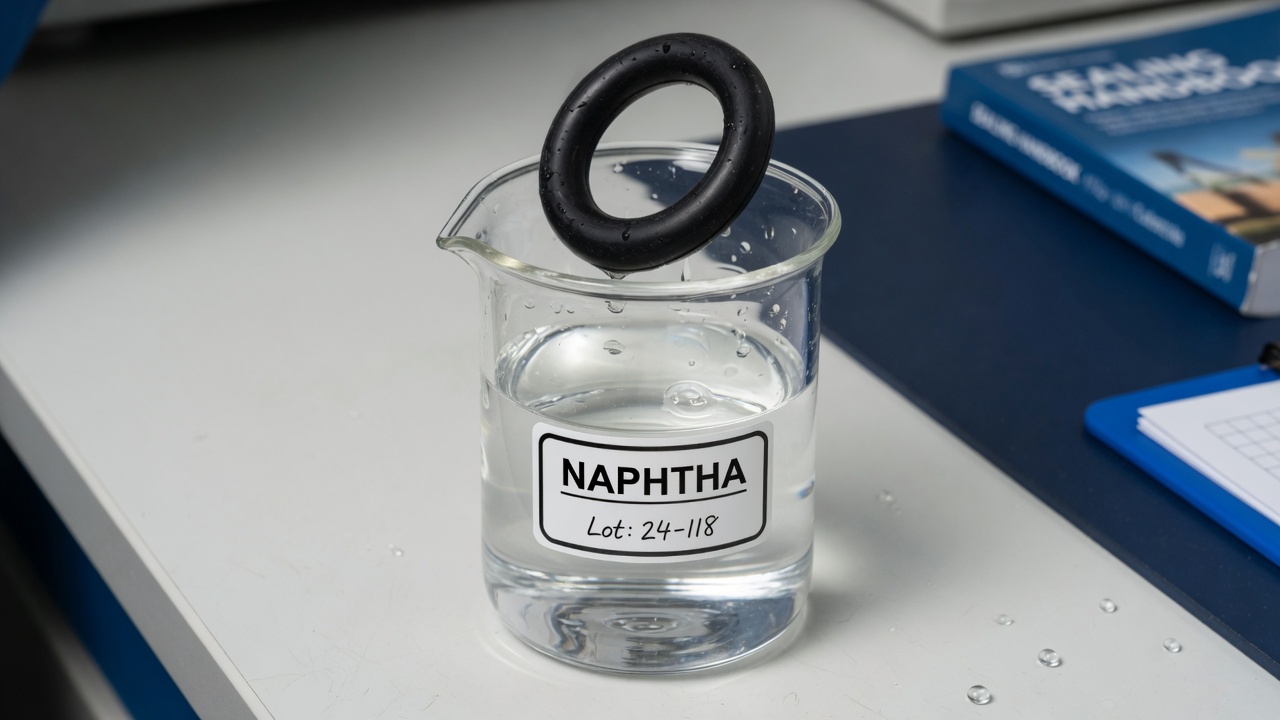
Naphtha is a light petroleum distillate used as a solvent, thinner, and process fluid. It is mostly aliphatic hydrocarbons, highly volatile, and aggressive toward elastomers that are built for water, steam, or polar chemistry. Pick the wrong O-Ring family and you get swell, softening, cracking, or a ring that turns brittle after the solvent flashes off.
This guide covers what naphtha is, which O-Ring compounds are usually serviceable, which to avoid, and how to confirm a choice on the handbook Chemical Compatibility Chart.
What naphtha is (and why the name varies)
“Naphtha” is a boiling-range cut, not a single molecule. Suppliers sell grades such as:
- VM&P naphtha (varnish makers’ and painters')
- Light or heavy naphtha
- Petroleum naphtha / solvent naphtha
- Closely related cuts labeled ligroin, petroleum ether, or benzine in older charts
Composition shifts with source and cut. Higher aromatic content (benzene, toluene, xylene fractions) is harder on nitrile than a clean aliphatic cut. Temperature and immersion time matter too. A ring that survives a wipe-down may not survive continuous immersion at elevated temperature.
Treat chart ratings as a first pass for a generic commercial compound at about room temperature. Confirm the actual grade, concentration, and duty before you lock a seal.
How naphtha attacks an O-Ring
Aliphatic hydrocarbon solvents dissolve into nonpolar elastomers and swell the network. Swell lowers modulus and tear strength, so the seal can leak even when the polymer is not chemically destroyed. After the solvent evaporates, some compounds harden or crack. In dynamic service the softened ring also abrades and extrudes more easily. See Failure Analysis and Chemical Compatibility for the broader selection rules.
Handbook chart ratings for naphtha
The row below uses the same rating badges and layout as the interactive Chemical Compatibility Chart. Search naphtha, VM&P naphtha, or the common misspelling naptha on that page to pin the live row.
| Fluid | Best | N Nitrile | H HNBR | E EPDM | C Neoprene | S Silicone | V Viton® | P Urethane | F FVMQ | A Aflas® | B Butyl | K FFKM | T PTFE |
|---|---|---|---|---|---|---|---|---|---|---|---|---|---|
| Naphtha | V | 1 | 1 | 4 | 2 | 4 | 1 | 2 | 1 | 2 | 4 | 1 | 1 |
Petroleum distillate (aliphatic hydrocarbons). Aromatic content and temperature shift ratings; verify the grade in service.
Best family on the chart row: Viton® / FKM (V). Nitrile and HNBR are also excellent (1) for many ambient aliphatic cuts.
Related chart rows in the same hydrocarbon family: Hexane, Heptane, Benzine (Ligroin), Kerosene, and Gasoline Non-Ethanol.
Recommended O-Ring materials for naphtha
First choice: Viton® / FKM
FKM (Viton®) is the usual default for naphtha and related petroleum solvents when you want margin on heat and media. Generic chart rating for naphtha is excellent (1). Continuous service is commonly up to about 400°F (204°C) depending on grade. Use FKM when temperature is elevated, aromatic content is uncertain, or you want one compound family that also covers fuels and many oils.
Strong everyday option: Nitrile (Buna-N) and HNBR
Nitrile (NBR) and HNBR are both excellent (1) on the handbook naphtha row for typical aliphatic cuts at room temperature. Nitrile is the cost-effective shop choice for ambient solvent service. Step up to HNBR when you need more heat, wear, or aging resistance in the same petroleum-friendly chemistry.
Also usually serviceable
Materials to avoid with naphtha
These families are not recommended (4) for naphtha on the handbook chart:
Do not use EPDM “because it is a good seal material.” It is a good seal material in the wrong chemistry for this fluid.
Practical selection checklist
- Identify the grade. VM&P, light, heavy, or a named solvent blend. Ask for aromatic content if the duty is continuous immersion.
- Set temperature. Room-temperature wipe-down is not the same as a warm process loop. FKM gains importance as heat rises.
- Static or dynamic. Softened rubber loses abrasion and extrusion resistance. For reciprocating glands, prefer a higher-modulus compound and check groove design and extrusion.
- Hardware and ventilation. Naphtha is flammable and volatile. Seal choice does not replace safe handling.
- Confirm on the chart, then test. Open the Chemical Compatibility Chart, pin Naphtha, and compare candidates. For critical service, contact The O-Ring Store with fluid grade, temperature, and duty cycle.
Quick answers
Which O-Ring for naphtha?
Start with FKM (Viton®) or nitrile (Buna-N). Use HNBR when you need more heat or
wear. Avoid EPDM, silicone, and butyl.
Is VM&P naphtha the same as naphtha on the chart?
VM&P is a common naphtha grade. Search aliases on the chart map VM&P naphtha,
petroleum naphtha, and naptha to the Naphtha row.
Can I use EPDM with naphtha?
No. EPDM is rated not recommended for naphtha. Use it for water, steam, and glycol
brake fluid instead.
Chart ratings are guidance for generic commercial compounds near room temperature. Exact formulation, aromatic content, temperature, and exposure time change outcomes. Evaluate specific parts before use in critical applications.