
Lubricating Oils (Synthetic Base) O-Ring Compatibility: Which Compounds Hold Up
Synthetic-base lubricating oil O-Ring guide for compressors, hydraulics, and gearboxes: chart ratings, why FKM is the preferred start, and which elastomers to avoid or test.
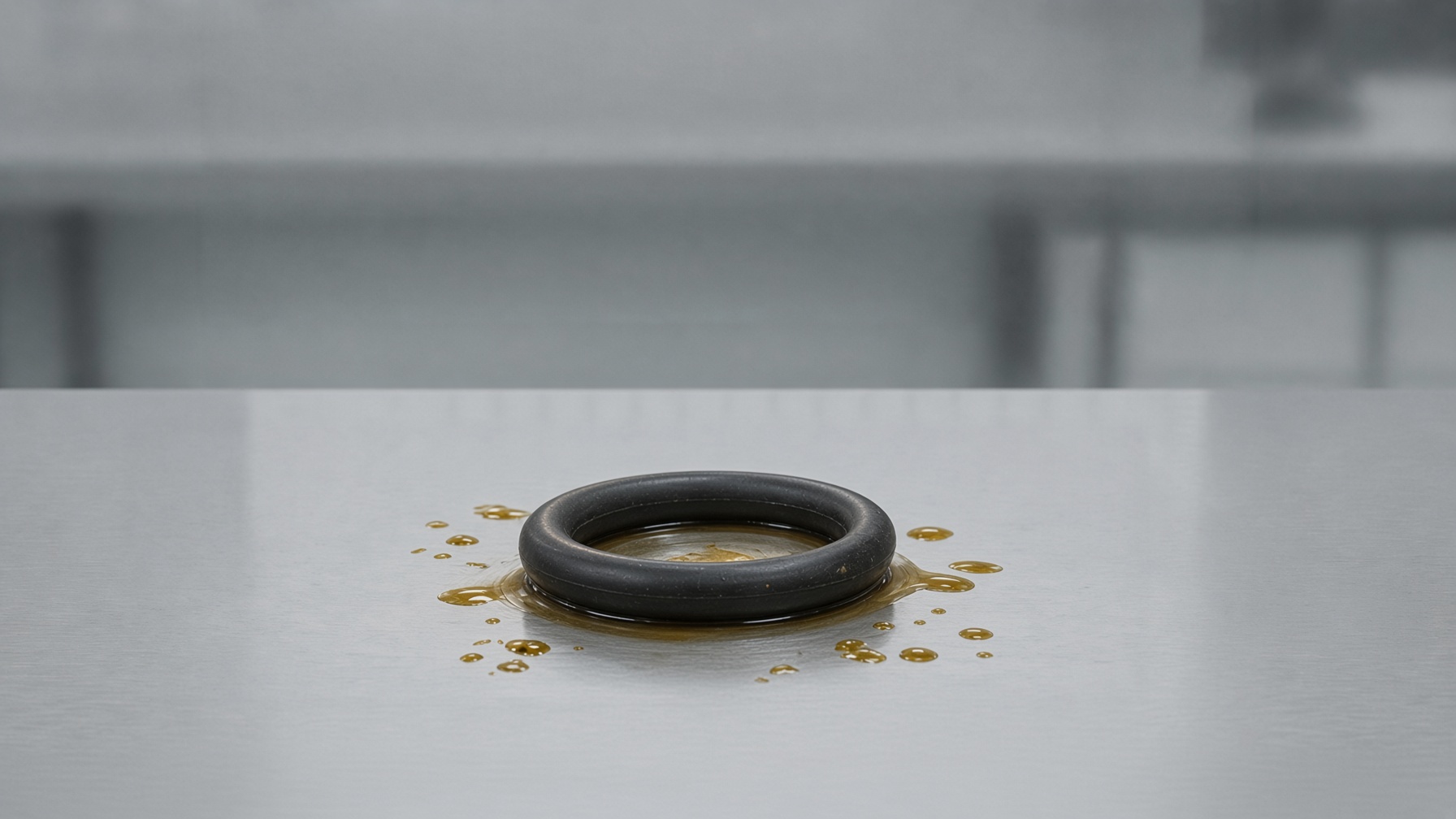
Lubricating oils with a synthetic base stock cover a wide family of compressor, hydraulic, gear, and specialty lubricants built on PAO, esters, PAG, phosphate esters, and related chemistries instead of crude-derived mineral oil. Seals on compressors, power units, gearboxes, filter housings, and lube skids see formulated packages that can be friendlier or harsher than mineral oil depending on the base stock and additive suite. Pick the wrong O-Ring family and you get swell, softening, hardening after soak, or early leak-off under heat and pressure.
This guide maps the handbook Chemical Compatibility Chart row for lubricating oils (synthetic base) to practical compound choices.
Where it shows up
- Rotary-screw and reciprocating compressors: synthetic compressor oils in air and process gas service
- Hydraulic power units: fire-resistant or long-life synthetic hydraulic fluids in presses, mobile equipment, and plant loops
- Gearboxes and circulating lube systems: synthetic gear and circulating oils where drain intervals and heat resistance matter
- Vacuum pumps and specialty machines: ester and PAG packages tuned for vapor pressure or washability
- Filter, cooler, and valve manifolds: static and semi-dynamic glands bathed in warm synthetic lubricant
“Synthetic base” is a category, not one molecule. PAO behavior differs from diester or phosphate ester service. Chart ratings are a first pass for a generic commercial compound near room temperature. Confirm the exact base stock, additive package, and continuous oil temperature before you lock a seal.
How synthetic-base lubricating oils stress an O-Ring
Nonpolar and moderately polar synthetic stocks dissolve into elastomer networks and can swell the ring, drop modulus, and raise extrusion risk in pressurized glands. Highly polar synthetics (some esters and PAGs) punish oil-service stocks that thrive in mineral oil and reward other families. Heat accelerates aging and compression set even when the chart letter looks strong. See Chemical Compatibility, the O-Ring Temperature Guide, and Failure Analysis.
Handbook chart ratings for lubricating oils (synthetic base)
Same rating badges and layout as the interactive chart. Search lubricating oils (synthetic base) or synthetic base on the Chemical Compatibility Chart to pin the live row.
| Fluid | Best | N Nitrile | H HNBR | E EPDM | C Neoprene | S Silicone | V Viton® | P Urethane | F FVMQ | A Aflas® | B Butyl | K FFKM | T PTFE |
|---|---|---|---|---|---|---|---|---|---|---|---|---|---|
| Lubricating Oils (Synthetic base) | V | X | 2 | X | 4 | 3 | 1 | 3 | 2 | X | 4 | 1 | 1 |
Best family on the chart row: Viton® / FKM (V). FFKM and PTFE also rate excellent (1). HNBR and fluorosilicone rate good (2). Silicone and polyurethane rate poor (3). Neoprene and butyl are not recommended (4). Nitrile, EPDM, and Aflas lack data (X) on this generic synthetic-oil row.
Recommended O-Ring materials
First choice: Viton® / FKM
FKM (Viton®) is rated excellent (1) and is the chart’s preferred letter for lubricating oils (synthetic base). It is the everyday default when the synthetic grade is unspecified, temperature climbs, or you want one fluorocarbon family that also covers many mineral oils and fuels. Continuous service is commonly up to about 400°F (204°C) depending on grade. Use 70 Shore A for most static covers and flanges; step hardness or add a back-up ring when pressure and clearance gap climb on compressor and hydraulic ports.
Also usually serviceable
Materials to use with caution or avoid
Materials with insufficient chart data
Related chart rows worth checking when you know the stock: mineral Lubricating Oils (Crude and Refined), named PAG products such as Ucon Lubricant 50-HB-260, and specific ester or phosphate-ester fluids when listed.
Physical properties to match
Chemistry first, then the machine:
- Temperature: compressor discharge, hydraulic loops, and gearboxes often run warm to hot. Stay inside the compound’s continuous window and check compression set near oil temperature (Temperature Guide).
- Hardness: 70 Shore A for most static lids and flanges; 90 Shore A or a back-up ring when pressure and clearance gap raise extrusion risk (Shore A Hardness).
- Static vs dynamic: cover and filter seals are mostly static; shaft and rod glands need abrasion, extrusion, and friction control beyond a chart “1” (groove design).
- Size: lock ID × CS or the AS568 dash on the Master O-Ring Size Chart before arguing compound.
Practical selection checklist
- Name the base stock (PAO, ester, PAG, phosphate ester, blend) and the finished lubricant brand or ISO viscosity grade.
- Note continuous oil temperature and whether the seal sees splash, mist, or full immersion.
- Start with FKM unless a plant standard already matches a proven grade for that oil.
- Treat nitrile as unproven on this generic row until the SDS and immersion data say otherwise; avoid neoprene and butyl for continuous synthetic-oil contact.
- Pin Lubricating Oils (Synthetic base) on the Chemical Compatibility Chart and test critical glands. Contact us with oil grade, temperature, hardness, and duty cycle when the machine is production-critical.
Bottom line
For lubricating oils (synthetic base), the handbook chart points to FKM (Viton®) first, with FFKM and PTFE also rated excellent and HNBR or fluorosilicone as good candidates when the duty and grade support them. Neoprene and butyl are the wrong starting point. Nitrile remains common in shops for mineral oil, but this generic synthetic row leaves it as insufficient data, so match the actual synthetic package before you reuse an NBR habit. Size the ring correctly, then match hardness and heat resistance to the compressor, hydraulic, or gearbox loop you actually run.
Chart ratings are guidance for generic commercial compounds near room temperature. Exact base stock, additive package, temperature, and exposure time change outcomes. Evaluate specific parts before use in critical applications.