
Lubricating Oils (Crude & Refined) O-Ring Compatibility: Which Compounds Hold Up
Lubricating oils (crude and refined) O-Ring guide for pumps, compressors, gearboxes, and lube skids: chart ratings, which elastomers to use, and which to avoid.
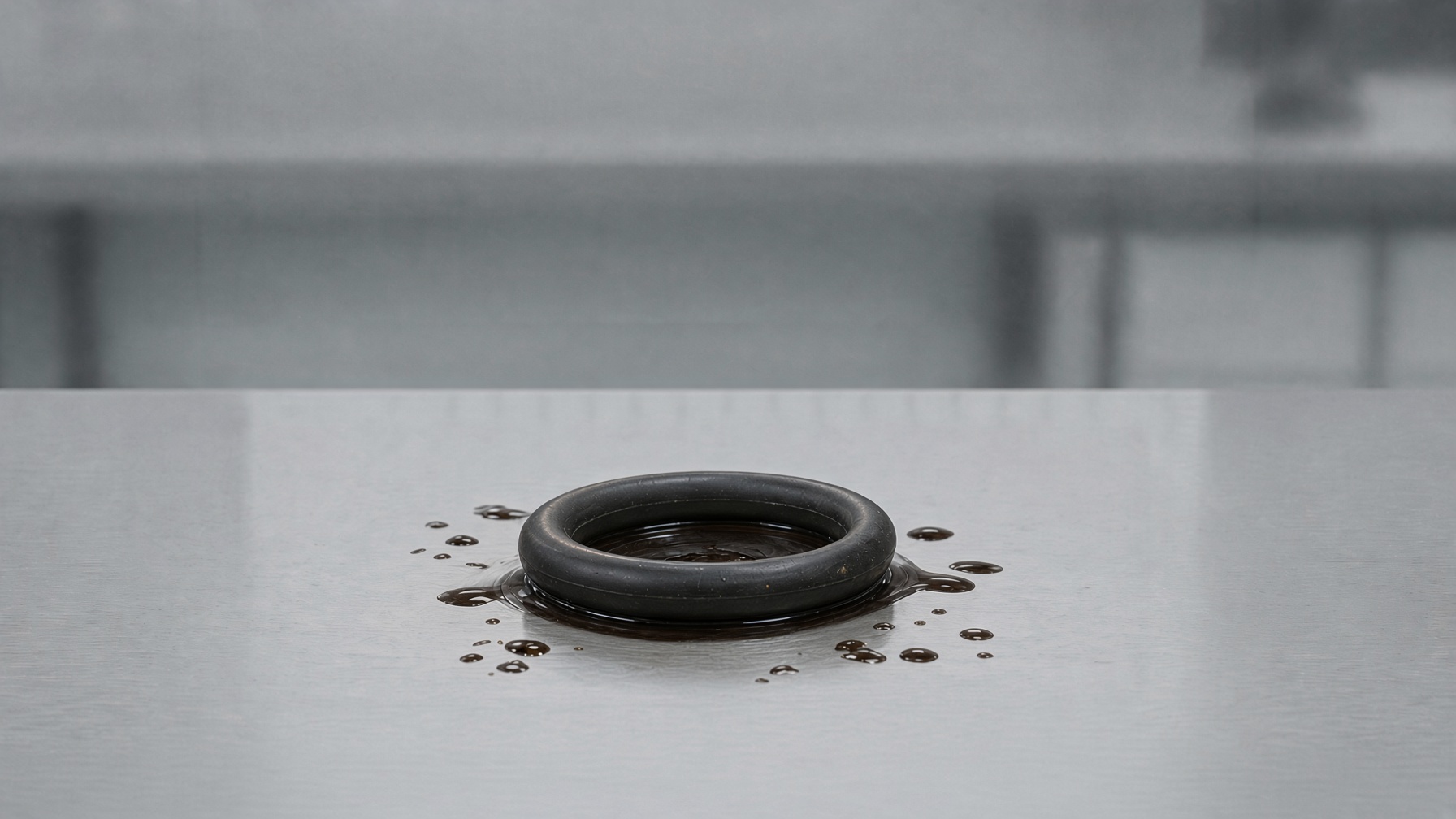
Lubricating oils (crude and refined) are petroleum hydrocarbon lubricants used across pumps, compressors, gearboxes, hydraulic power units, and plant lubrication skids. Seals on filter housings, shaft glands, valve manifolds, and oil cooler flanges see mineral-oil chemistry that favors oil-service elastomers and punishes polar-fluid families. Pick the wrong O-Ring compound and you get swell, softening, or early leak-off once heat and additives stack against the polymer.
This guide maps the handbook Chemical Compatibility Chart row for lubricating oils (crude and refined) to practical compound choices.
Where it shows up
- Compressors and blowers: crankcase, frame, and circulating lube oils on reciprocating and rotary machines
- Pumps and process skids: bearing housings, seal flush oil, and dedicated lubrication units feeding rotating equipment
- Gearboxes and reducers: industrial gear oils in mills, conveyors, and drives
- Hydraulics and power units: mineral hydraulic oils sharing the same petroleum base stock family
- Refinery and terminal service: crude-adjacent and refined lube streams on transfer and storage equipment
Service is usually neat mineral oil (or a formulated package on that base) from ambient to warm continuous duty. Additive packages, viscosity grade, and temperature change the outcome. Chart ratings assume a generic commercial compound near room temperature.
How lubricating oils stress an O-Ring
Crude and refined lubricating oils are nonpolar hydrocarbons. They dissolve into polar elastomers (EPDM, butyl, many silicones) and swell the network, cutting modulus and tear strength so the seal can leak even before the polymer is chemically destroyed. Oil-service families such as FKM, fluorosilicone, and many nitriles tolerate that chemistry far better. Heat, aromatic content, and EP or detergent additives still matter. See Chemical Compatibility and Failure Analysis for swell and extrusion modes.
Handbook chart ratings for lubricating oils (crude & refined)
Same rating badges and layout as the interactive chart. Search Lubricating Oils (Crude & Refined) on the Chemical Compatibility Chart to pin the live row.
| Fluid | Best | N Nitrile | H HNBR | E EPDM | C Neoprene | S Silicone | V Viton® | P Urethane | F FVMQ | A Aflas® | B Butyl | K FFKM | T PTFE |
|---|---|---|---|---|---|---|---|---|---|---|---|---|---|
| Lubricating Oils (Crude & Refined) | V | 2 | 2 | 4 | 3 | 3 | 1 | 2 | 1 | 1 | 4 | 1 | 1 |
Best family on the chart row: Viton® / FKM (V). Fluorosilicone, Aflas®, FFKM, and PTFE also rate excellent (1). Nitrile, HNBR, and polyurethane rate good (2). Neoprene and silicone rate poor (3). EPDM and butyl are not recommended (4).
Related chart rows in the same hydrocarbon family: mineral oil, hydraulic oils, gear oils, and compressor lubricants when they share a petroleum base stock.
Recommended O-Ring materials
First choice: Viton® / FKM
FKM (Viton®) is rated excellent (1) and is the chart’s preferred letter for lubricating oils (crude and refined). Use it when temperature climbs, aromatic content is uncertain, or you want one family that also covers fuels and many hot oils. 70 Shore A covers most static covers and flanges; step hardness or add a back-up ring when pressure and gap climb on pumps and filter housings.
Also usually serviceable
Materials to use with caution or avoid
Do not specify EPDM “because it seals well.” It seals well in the wrong chemistry for this fluid family.
Physical properties to match (after chemistry)
A chart 1 means the polymer family usually survives the fluid. It does not finish the spec. After you shortlist FKM (or another excellent or good family above), lock the physical properties the gland and machine actually need.
Hardness (Shore A / durometer)
- 70 Shore A is the everyday default for static covers, flanges, and low-to-moderate pressure lube lines.
- 90 Shore A (or 70 plus a back-up ring) when pressure and clearance gap push extrusion risk on pumps, coolers, and filter bowls.
- Soft grades (50–60) seal rough faces better but give up extrusion margin.
See Shore A Hardness for the extrusion-gap chart and feel references.
Temperature
Handbook chemical ratings are near room temperature. Circulating lube systems and compressor frames often run warmer. As a starting frame:
| Family | Typical handbook range (grade dependent) | Notes for lubricating oil duty |
|---|---|---|
| FKM | about −20°F to +400°F | Preferred chart pick for heat and oil margin |
| Fluorosilicone | about −75°F to +350°F | When cold start flexibility matters |
| Nitrile | about −40°F to +250°F | Everyday ambient mineral oil |
| HNBR | about −40°F to +300°F | Extra heat and wear for pumps / compressors |
| Aflas® | about +25°F to +400°F | Oil plus steam or amine traces |
| FFKM | about 0°F to +600°F | Mixed aggressive hydrocarbon streams |
Confirm the formulated lubricant’s temperature window (viscosity grade, antioxidants, EP packages) as well as the elastomer’s.
Static vs dynamic duty
- Static face and cover seals: chemical rating + hardness + squeeze usually dominate.
- Dynamic shafts, rods, and reciprocating glands: add abrasion, extrusion, and friction. Harder FKM or HNBR often outlasts soft general-purpose grades in lubricated motion. Check groove design and seal types.
Size and squeeze
Lock ID × CS (or the AS568 dash) on the Master O-Ring Size Chart before you argue compound. Wrong size fails faster than a second-choice polymer that fits the groove.
Crude vs refined and additive notes
“Crude” and “refined” cover a wide boiling and aromatic range. Detergent, antiwear, and EP packages can be harder on elastomers than a neat base stock. If the loop also sees water, glycol coolants, or synthetic esters, say so when you specify the ring. Related chart rows to compare: other mineral oils, hydraulic oils, and named compressor lubricants on the Chemical Compatibility Chart.
Practical selection checklist
- Confirm the fluid. Crude cut vs refined mineral oil vs a fully formulated compressor, gear, or hydraulic package.
- Temperature. Ambient filter bowls are milder than hot compressor frame or gearbox oil.
- Hardness and pressure. Default 70 Shore A; step to 90 or add a back-up ring when gap and psi demand it.
- Static or dynamic. Shafts and reciprocating glands need abrasion and extrusion resistance beyond a chemical rating alone.
- Confirm on the chart, then test. Pin Lubricating Oils (Crude & Refined) on the Chemical Compatibility Chart. For critical service, contact The O-Ring Store with fluid grade, temperature, hardness, and duty cycle.
Quick answers
Which O-Ring for lubricating oils (crude and refined)?
Start with FKM (Viton®) at 70 Shore A for general static duty, or 90 Shore A /
back-up rings when pressure and gap climb. Fluorosilicone, Aflas®, FFKM, and PTFE also rate
excellent on the handbook row. Nitrile, HNBR, and polyurethane are usually good for milder
mineral-oil service. Avoid EPDM and butyl; treat neoprene and silicone as poor fits.
Is this the same as hydraulic oil or compressor lubricant?
Many share a petroleum base stock, but additive packages and viscosity grades differ. Always
match the exact fluid name on the chart and on the SDS.
Chart ratings are guidance for generic commercial compounds near room temperature. Concentration, temperature, and co-fluids change outcomes. Evaluate specific parts before use in critical applications.