EPDM NSF-61 O-Rings: Peroxide-Cured, Chloramine-Resistant Potable Water Seals
Buy EPDM FDA/NSF-61 peroxide-cured O-Rings for chloraminated drinking water, hot water, and food contact. Specs, approvals, and where this 70 duro compound belongs.
Shop EPDM FDA/NSF-61 O-Rings What NSF/ANSI 61 means Master O-Ring Size Chart
Municipal drinking water, bottle fillers, valves, and food wash-down lines need an EPDM grade built for that duty, not a generic black weatherstrip compound. The O-Ring Store stocks a 70 Shore A peroxide-cured EPDM that meets FDA food-contact expectations and NSF/ANSI 61 potable-water requirements, with chloramine resistance for the disinfectants modern utilities actually run.
Shop the line: EPDM FDA & NSF-61 (chloramine-resistant, peroxide-cured).
Compound specs at a glance
| Attribute | This grade |
|---|---|
| Polymer | EPDM (ethylene-propylene-diene) |
| Hardness | 70 Shore A |
| Color | Black |
| Cure | Peroxide |
| Approvals | FDA (21 CFR 177.2600 family) and NSF/ANSI 61 |
| Key extras | Chloramine resistance, lower extractables vs many sulfur-cured water grades |
| Typical callout flavor | Commercial M4AA710-class potable EPDM (confirm the lot datasheet) |
It is formulated to meet or exceed properties associated with familiar potable-water EPDM targets such as E603-70, E300-70, E1028-70, and similar 70-duro NSF/FDA families. Match your drawing or RFQ to the current datasheet and Certificate of Conformance for the lot you order.
Why this grade for drinking water
Peroxide cure
Peroxide curing builds carbon-carbon cross-links instead of sulfur bridges. For potable and food service that usually means:
- Better heat, steam, and compression set than typical sulfur-cured water rings
- No sulfur package to leach into the stream
- The cure path NSF and food-contact buyers expect on critical seals
Chloramine resistance
Many utilities moved from free chlorine toward chloramine. Rings that “always worked on city water” can crack, harden, or take a set years sooner under chloramine. This compound is built for that disinfectant load, not only for plain tap water in a lab jar.
NSF/ANSI 61 + FDA
NSF/ANSI 61 addresses health effects for materials that contact drinking water (valves, meters, pumps, fillers, fittings). FDA 21 CFR 177.2600 covers rubber articles for repeated food contact. Together they are the callouts water and beverage buyers put on the PO. Learn more on our NSF/ANSI 61 page.
Where to use it
- Drinking-water valves, meters, pumps, and fittings
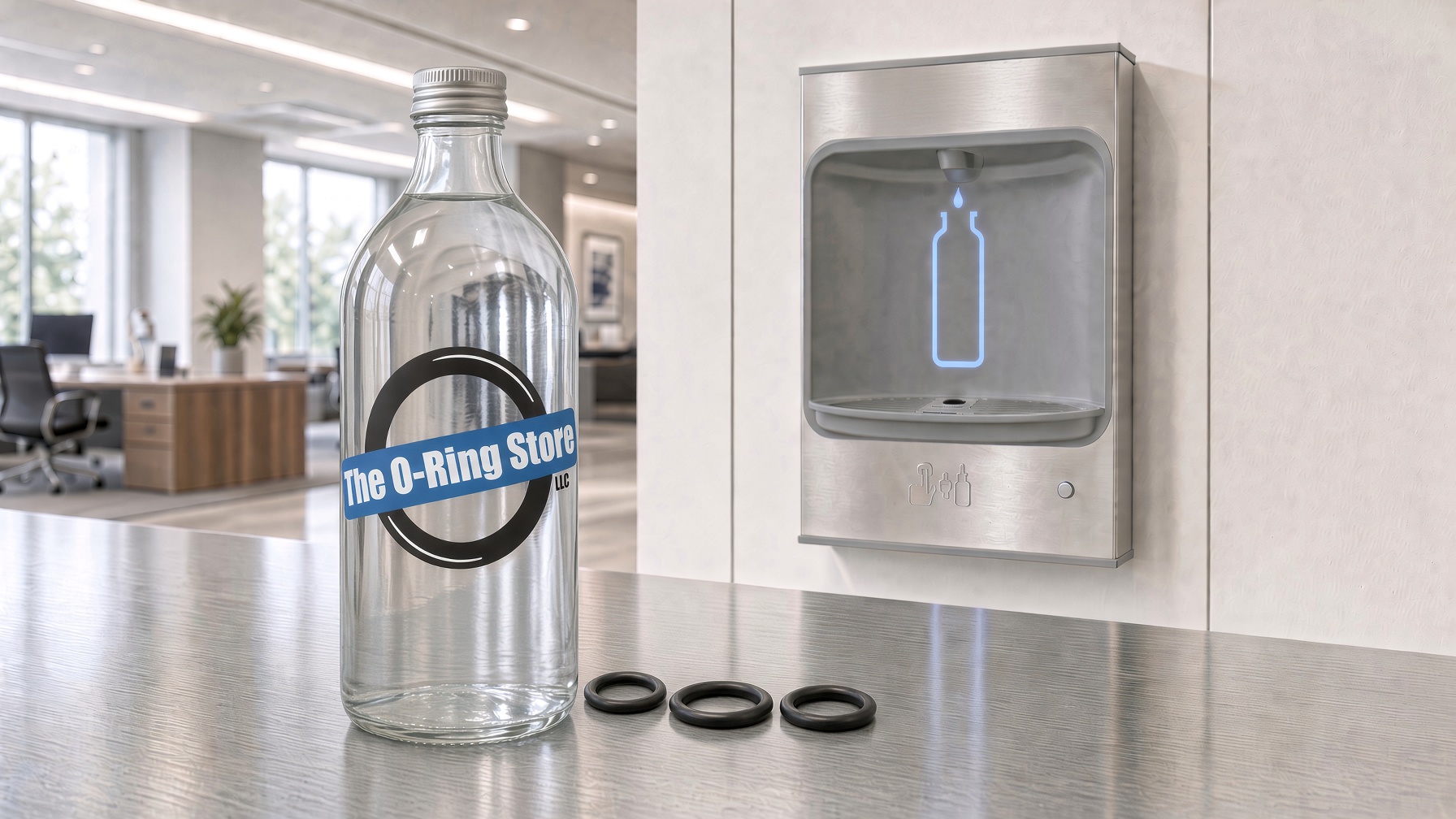
- Wall-mounted bottle filling stations and coolers on NSF potable lines (for example an Elkay EMASM mechanical surface-mount bottle filler)
- Filter housings and manifolds on municipal or building potable lines
- Food and beverage equipment on aqueous product or wash-down circuits
- Hot water and light steam within the compound’s temperature window
- Appliance and plumbing OEM seals that call out NSF-61 / FDA EPDM
Fluids this compound is built for
Strong fit
- Hot and cold potable water, including chloraminated municipal supply
- Steam and hot water (within the datasheet window)
- FDA / food and beverage aqueous contact and many CIP wash chemistries (confirm the cleaner)
- Ozone, weather, and outdoor ageing when the same peroxide EPDM is used outside water duty
Do not use in
- Petroleum oils, greases, fuels, or gasoline
- Aliphatic, aromatic, or chlorinated hydrocarbons
NSF on the bag does not make EPDM oil-compatible. Oil service needs a different polymer family. Confirm cleaners and co-fluids on the Chemical Compatibility Chart.
Physical properties to put on the print
NSF-61 covers health effects. You still specify the ring for the gland.
Hardness
70 Shore A is the stock hardness and the right default for most static water fixtures, covers, valve seats, and bottle-filler seals. If pressure and clearance gap raise extrusion risk, tighten the gland or add an approved back-up strategy. See Shore A Hardness.
Temperature
Commercial EPDM often quotes about -65°F to +300°F (-54°C to +149°C), grade dependent. Peroxide cure helps the hot-water and steam end. Continuous steam at the top of the range is still a harder ask than cold potable service. Use the lot datasheet when you sit near an edge.
Compression set and steam life
Better set resistance is a main reason buyers pay for peroxide NSF EPDM: the ring keeps sealing force after heat and time, not only on day one.
Size
Lock ID × CS or the AS568 dash on the Master O-Ring Size Chart before you order. Wrong size fails faster than any compound debate. For measuring tips, see How to Measure an O-Ring.
Documentation and ordering
We ship these rings under our ISO 9001:2015 system with lot-level paperwork. Ask for the Certificate of Conformance and, when the print requires it, the NSF/FDA statements that match the lot.
Shop EPDM FDA/NSF-61 peroxide-cured O-Rings (AS568)
Need a size that is not listed, a metric twin, or help matching a drawing callout? Contact us with fluid, temperature, pressure, and the dash or measured ID × CS. We make getting O-Rings easy.
Bottom line
For chloraminated potable water, hot water, bottle fillers, and FDA aqueous food contact, start with our peroxide-cured EPDM NSF-61 / FDA 70 duro compound: the cure, the approvals, and the chloramine resistance water buyers ask for. Keep it out of oil. Size it on the Master O-Ring Size Chart. Order 70 Shore A unless the gland and pressure say otherwise.