Do O-Rings Expire? Here's the Straight Answer
Most O-Rings outlast the drawer they sit in. Here's how long each compound really keeps, what ruins them on the shelf and how to tell if an old one is still good.
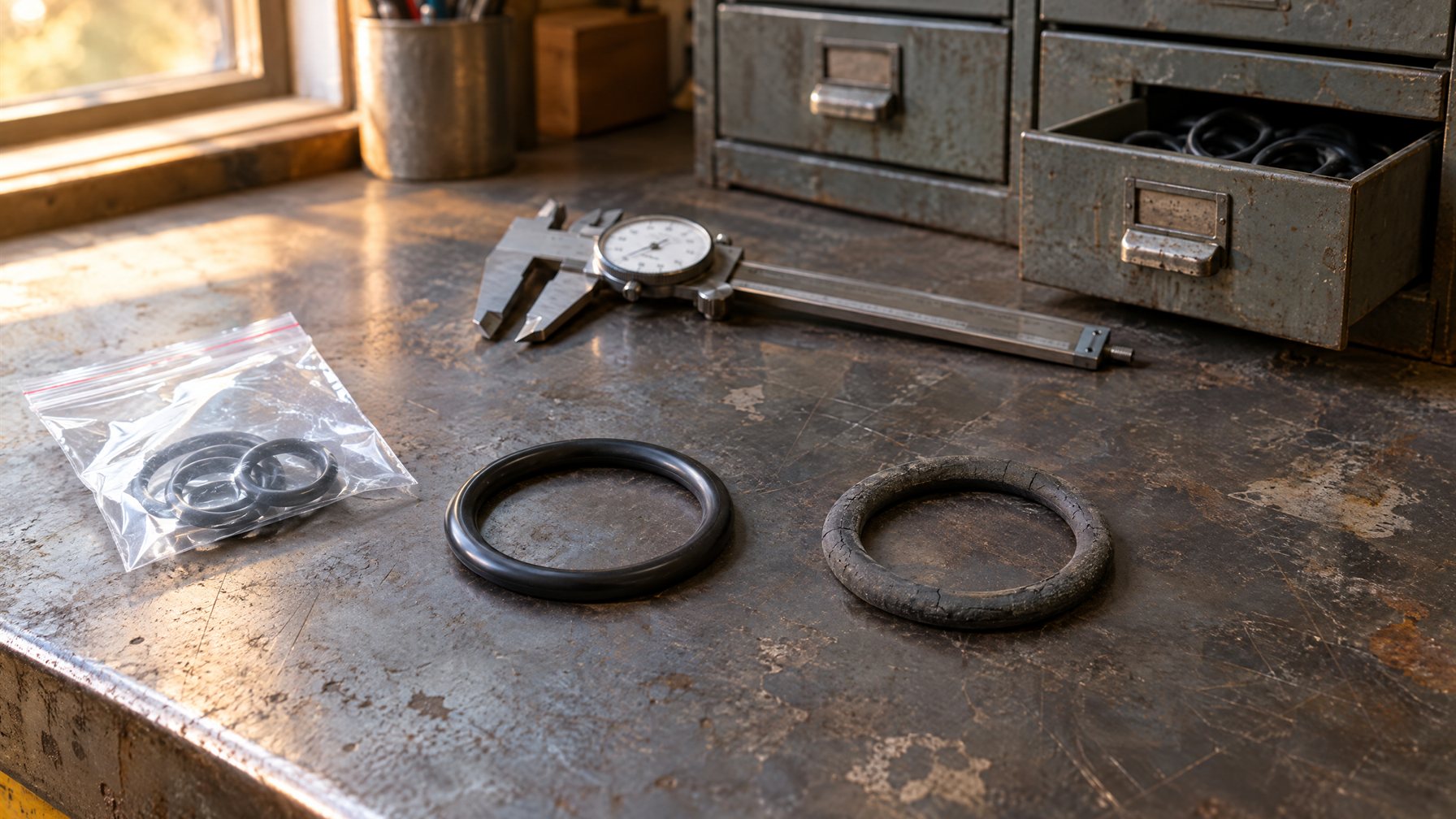
“Are these still good?” We hear it all the time, usually about a bag of O-Rings that’s been in a drawer since before anybody can remember. Most of the time the answer is yes. Shelf life is the most over-worried spec in sealing, and how you store a ring matters a lot more than how old it is.
The short answer:
- EPDM, Viton® (FKM), silicone, fluorosilicone, FFKM, PTFE and butyl: unlimited when stored right.
- Nitrile, HNBR and neoprene: 15 years from cure.
- Urethane: 5 years. Rotate it hardest.
- Heat, sunlight, ozone and stretching age a ring faster than time does.
How long each one really lasts
These numbers come from SAE ARP5316, the US aerospace standard most of the industry quotes. The full compound-by-compound table, including the more conservative ISO 2230 numbers, is on our O-Ring Shelf Life reference page.
| Compound | Shelf life (ARP5316) |
|---|---|
| EPDM, FKM / Viton®, silicone, fluorosilicone, Aflas®, FFKM, PTFE, butyl | Unlimited |
| Nitrile (Buna-N), HNBR, neoprene | 15 years |
| Cast and millable urethane | 5 years (cast can extend with inspection) |
| SBR | 3 years |
“Unlimited” isn’t a sales word. Decades of aerospace testing found that properly stored seals held their properties far longer than the old limits assumed, in one study past 30 years. The catch is in two words: properly stored.
What actually wears out a ring on the shelf
A ring in a sealed bag in a cool, dark cabinet barely changes. A ring in the wrong spot can be junk in a year. Here’s what does the damage:
- Heat. Keep stock under 100°F. Not above the compressor, not by the heater, not in the service truck all summer.
- Sunlight and UV. A window sill will crack rubber faster than a decade in a drawer.
- Ozone. Electric motors, sparking equipment and mercury-vapor lamps all make it, and ozone cracks rubber. See ozone cracking in our failure gallery.
- Moisture. Under 75% humidity, under 65% for urethane, which breaks down in moisture.
- Stretch and kinks. A ring hung on a nail or crammed in a tight spot takes a set before it’s ever installed.
The clock starts at cure, not when you bought it
Shelf life counts from the cure date, the quarter the rubber was made. It’s written like 2Q26, meaning the second quarter of 2026. A ring you bought yesterday with an old cure date is older than it looks. One that sat in your drawer three years with a recent cure date has most of its life left.
That’s why we put the cure date on every order, on the Certificate of Conformance right on top of your packing list. With it you can rotate first in, first out and actually know what you’ve got.
How to tell if an old O-Ring is still good
No cure date? Pull one out and look at it before it goes in a machine. Scrap it if it’s:
- Stiff. It should flex like new rubber, not feel like plastic.
- Cracked. Bend it gently and look close. Fine cracks on the outside of the bend mean ozone or heat got to it.
- Sticky or gummy. The compound is breaking down.
- Flat or out of round. It took a set in storage and won’t seal like it should.
If it passes all four and it’s not urethane, it’s very likely fine for general service. For anything critical, a ring costs a lot less than the downtime. Put a new one in.
What we’d keep in the spare drawer
If you stock spares that might sit for years, Viton® (FKM) is our pick. It’s unlimited on the shelf and covers oils, fuels and heat, so one bag handles a lot of jobs.
EPDM is just as long-lived for water, steam and brake fluid. Nitrile is fine too; 15 years is a long time for a ring that’s stored right. Just don’t buy ten years of urethane. It’s the one compound where “when in doubt, throw it out” is usually the right call.
A stocked OSK O-Ring kit keeps every size in its own sealed, labeled spot, which is good storage and easy to find in one box.
Mistakes we see
- The loose coffee can. Mixed compounds, no part numbers and no cure dates. Keep rings in their bag with the label until the day they’re used.
- Storing next to the motor. Shelving by a bench grinder or motor looks handy, but that’s where the ozone is.
- Two-loop coiling. Big rings coiled in two loops kink. Coil them in three equal loops.
- Installing cold. Rings stored below about 59°F get stiff. Let them warm to room temperature before installing so they don’t get damaged on assembly. Check the size against the Master O-Ring Size Chart while you’re at it.
Before you stock up
- Know which compound you run. It decides whether shelf life even matters.
- Pick a storage spot: cool, dry, dark and away from motors.
- Keep the bags and labels. Part number, compound and cure date stay with the ring.
- Rotate by cure date. Oldest out first.
- Ask for certs if your program calls out a standard. We match ARP5316 or ISO 2230, whichever your drawing names. Contact us or call (208) 413-6377.
We stock the most common O-Ring sizes, plus the ones our customers ask for and use. Every batch is certified by the Olypsys® O-Ring Measurement System from The O-Ring Store LLC, an ISO 9001:2015 certified distributor.
Straight answers
Do O-Rings expire? Some do and some don’t. Nitrile, HNBR and neoprene are rated 15 years and urethane 5. EPDM, Viton®, silicone, FFKM and PTFE are unlimited when stored right.
How do I read the cure date on an O-Ring bag? Quarter and year. 3Q24 means July through September of 2024. Shelf life counts from there.
Can I use an O-Ring that’s past its shelf life? Inspect it first. For general service a ring that’s soft, round and crack-free usually works. For critical, aerospace or contract work, follow the standard your drawing calls out and replace it.
Shelf-life figures from SAE ARP5316 and ISO 2230 for commercial compounds stored as described. Your drawing or contract’s standard always governs. Test before you trust a seal in critical service.