Ammonium Sulfite O-Ring Compatibility: Which Compounds Hold Up
Ammonium sulfite O-Ring guide for water treatment, pulp and paper, and photo chemistry: chart ratings, which elastomers to use, and which to avoid.
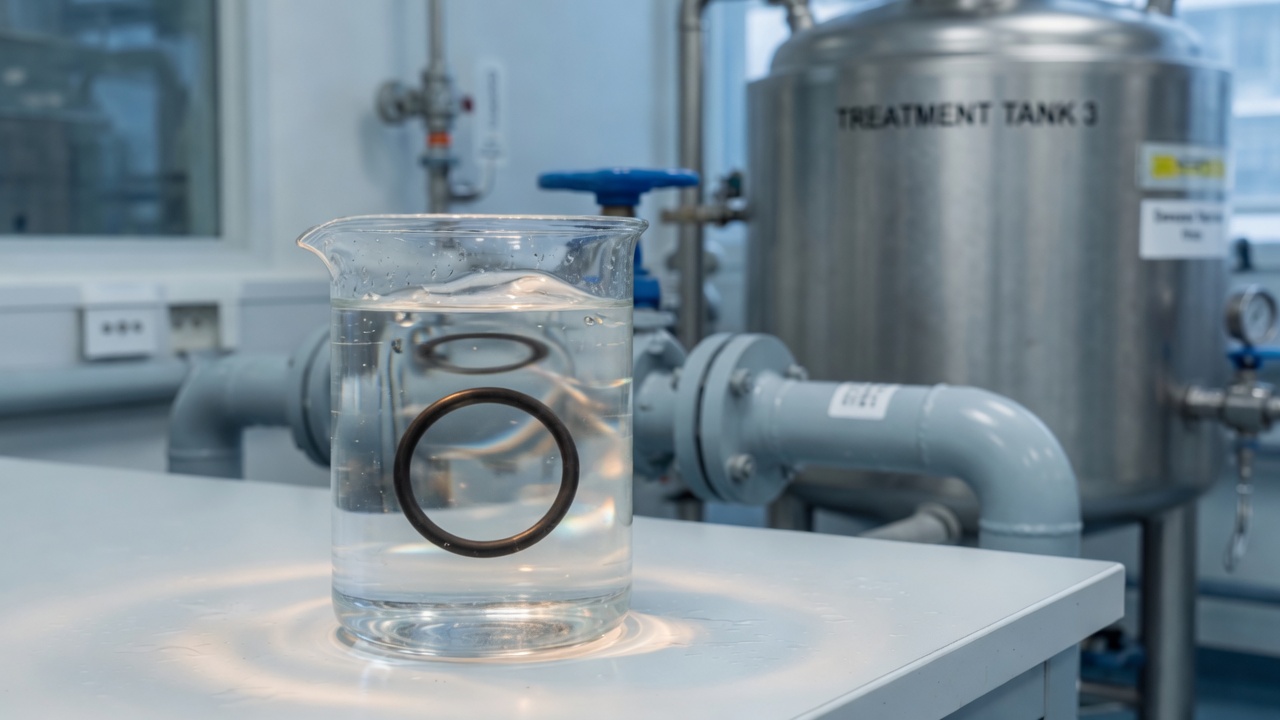
Ammonium sulfite ((NH4)2SO3) is a reducing salt used as a dechlorinator and oxygen scavenger in water treatment, a pulp and paper process chemical, a photographic reducing agent, and occasionally a food or specialty preservative. Seals in dosing pumps, sample lines, and storage systems see aqueous sulfite solutions that are polar and mildly aggressive. Pick the wrong O-Ring family and you get swell, softening, or early leak-off.
This guide maps the handbook Chemical Compatibility Chart row for ammonium sulfite to practical compound choices.
Where it shows up
- Municipal and industrial water treatment: dechlorination before RO membranes or discharge, and oxygen scavenging in boiler feed systems
- Pulp and paper: bisulfite-related pulping and bleaching chemistry
- Photographic and specialty chemicals: reducing baths and related process fluids
- Food / preservative grades: limited antioxidant uses under controlled specs
Service is usually aqueous, near ambient to moderately warm. Concentration and pH still matter: chart ratings assume a generic commercial compound near room temperature.
How ammonium sulfite stresses an O-Ring
Sulfite solutions are polar reducing media. Elastomers built for petroleum oils often take more swell or property loss here than they do in hydraulic oil. Water-friendly polymers (EPDM, butyl, neoprene in many grades) are the usual starting point. See Chemical Compatibility and Failure Analysis for swell and softening modes.
Handbook chart ratings for ammonium sulfite
Same rating badges and layout as the interactive chart. Search ammonium sulfite on the Chemical Compatibility Chart to pin the live row.
| Fluid | Best | N Nitrile | H HNBR | E EPDM | C Neoprene | S Silicone | V Viton® | P Urethane | F FVMQ | A Aflas® | B Butyl | K FFKM | T PTFE |
|---|---|---|---|---|---|---|---|---|---|---|---|---|---|
| Ammonium Sulfite | E | 3 | 3 | 1 | 1 | 2 | 3 | 4 | 1 | X | 1 | 1 | 1 |
Best family on the chart row: EPDM (E), with neoprene, fluorosilicone, butyl, FFKM, and PTFE also strong options depending on temperature and co-fluids.
Recommended O-Ring materials
First choice: EPDM
EPDM is rated excellent (1) for ammonium sulfite and is the everyday pick for water-treatment and aqueous reducing-service seals. It prefers polar fluids and hot water over petroleum oils, which matches this chemistry.
Also usually serviceable
Materials to use with caution or avoid
Practical selection checklist
- Confirm the solution. Concentration, pH, and whether chlorine or dissolved oxygen is also in the stream.
- Temperature. Room-temperature dosing is milder than hot boiler-related service.
- Static or dynamic. Metering pumps and valves need abrasion and extrusion resistance beyond a chemical rating alone. Check groove design.
- Confirm on the chart, then test. Pin Ammonium Sulfite on the Chemical Compatibility Chart. For critical service, contact The O-Ring Store with fluid grade, temperature, and duty cycle.
Quick answers
Which O-Ring for ammonium sulfite?
Start with EPDM. Neoprene, butyl, fluorosilicone, FFKM, and PTFE also rate well.
Avoid polyurethane; treat nitrile, HNBR, and standard FKM as poor fits for this fluid.
Is this the same as ammonium bisulfite?
Related sulfite chemistry appears in water treatment and pulp mills. Always match the
exact fluid name on the chart and on the SDS.
Chart ratings are guidance for generic commercial compounds near room temperature. Concentration, temperature, and co-fluids change outcomes. Evaluate specific parts before use in critical applications.