
O-Ring Sealing Principles: How an O-Ring Seals
How an O-Ring seals: initial squeeze, pressure energization, and elastic recovery, and why too little or too much of each causes a leak.
An O-Ring is a pressure-energized seal. That one idea explains almost everything about how it behaves, why it usually works, and how it fails. Once you see it, groove design and failure analysis both start to make sense.
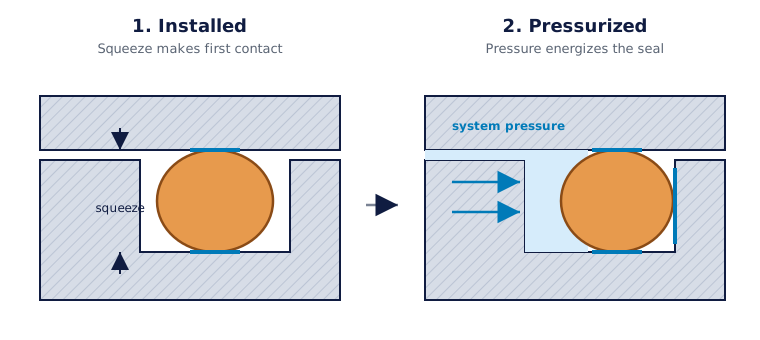
Step one: the squeeze
The groove an O-Ring sits in is cut shallower than the ring is thick. When you close the joint, the two sealing surfaces press on the ring and flatten it slightly. That deformation is called squeeze, and it does two things. It forces the rubber into full contact across both sealing faces, and it stores elastic energy in the ring, like a spring held down.
Even with no pressure in the system, that squeeze alone forms a seal. This is why an O-Ring holds against a slow drip or a vacuum before any real pressure ever shows up. Typical squeeze runs about 10 to 30 percent of the cross-section depending on whether the seal is static or moving. The Groove Design page has the numbers.
Step two: pressure does the rest
Here is the clever part. When system pressure comes up, it pushes the ring across the groove and packs it against the wall on the low-pressure side. That same pressure presses the ring hard against both sealing surfaces. The seal does not fight the pressure. It uses it.
The higher the pressure climbs, the harder the ring is driven into the sealing faces, so the tighter it seals. An O-Ring is one of the few seals that gets better at its job as the going gets tougher. That self-energizing action is why one simple ring can hold thousands of psi.
Where it stops working
That same mechanism sets the two limits you design against:
- Too little squeeze, or a ring that has taken a set, and the rubber loses contact and leaks. This is why heat and compression set matter: if the ring cannot spring back, it cannot seal. Pick a compound rated for your temperature on the Materials page.
- Too much pressure with too big a gap, and the pressure that was energizing the seal starts pushing rubber into the clearance gap instead. That is extrusion, and the fix is a back-up ring or a tighter gap.
So a good O-Ring seal is a balance: enough squeeze to make first contact, a compound that springs back over its whole service life, and a gland tight enough that pressure energizes the ring instead of extruding it. Everything in this section comes back to those three things.
Want the short version? Squeeze makes the seal, pressure tightens it, and elastic recovery keeps it sealing over time. Design for all three.
Sealing function described per the Freudenberg FST 2025 Technical Manual, ch. 6 (Static Seals). Compound choice comes first: start at the O-Ring Material Selection Guide.